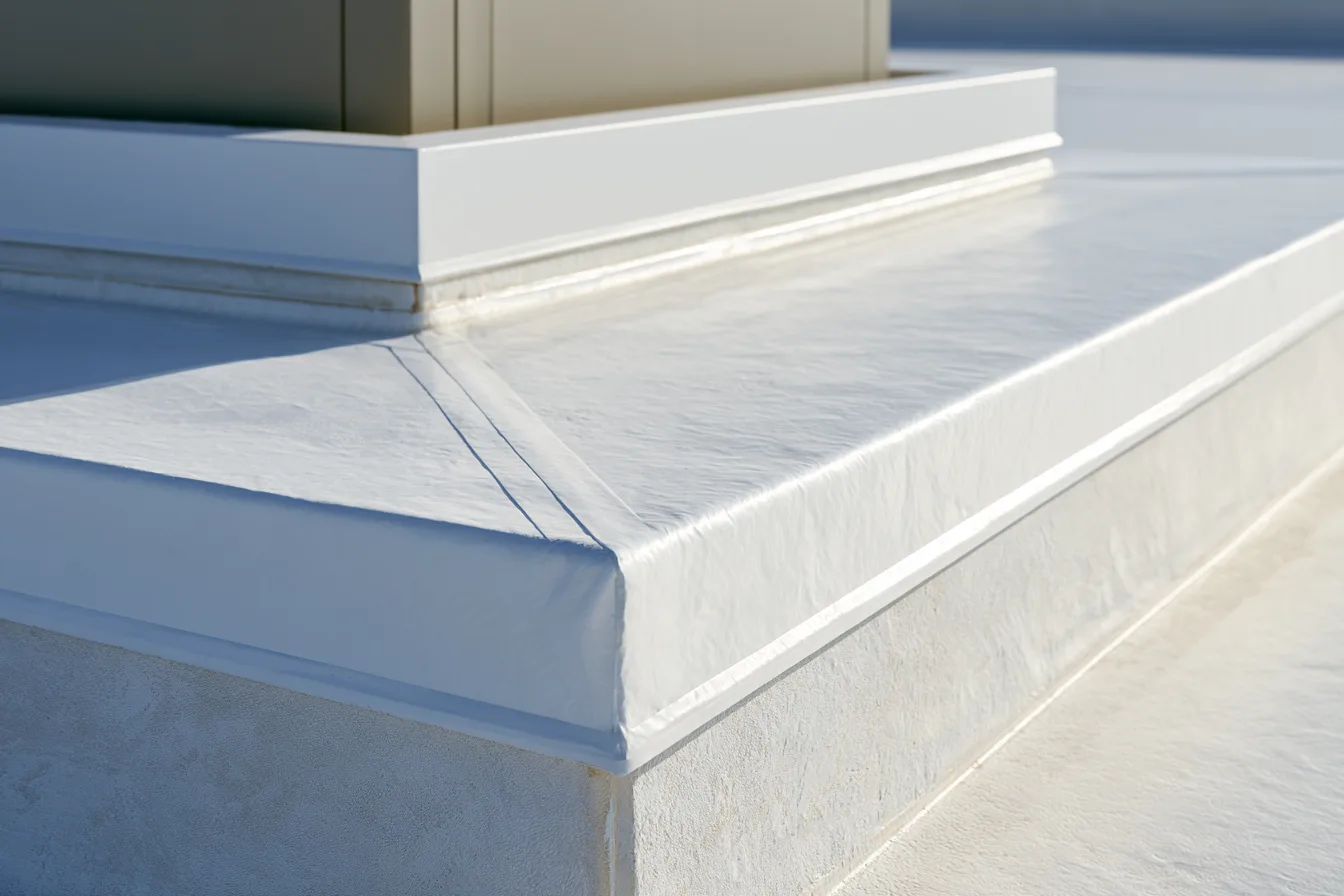
Welded seams
A seam repair needs material that can accept the specified preparation and welding. Proper heat-welding technique and inspection of cooled seams matter to the finished connection.
Free roof inspections. Repair and replacement options explained.
TPO roofing decisions start with the membrane, welded seams and the roof assembly below. Plan repairs or replacement around the actual Tuttle building.
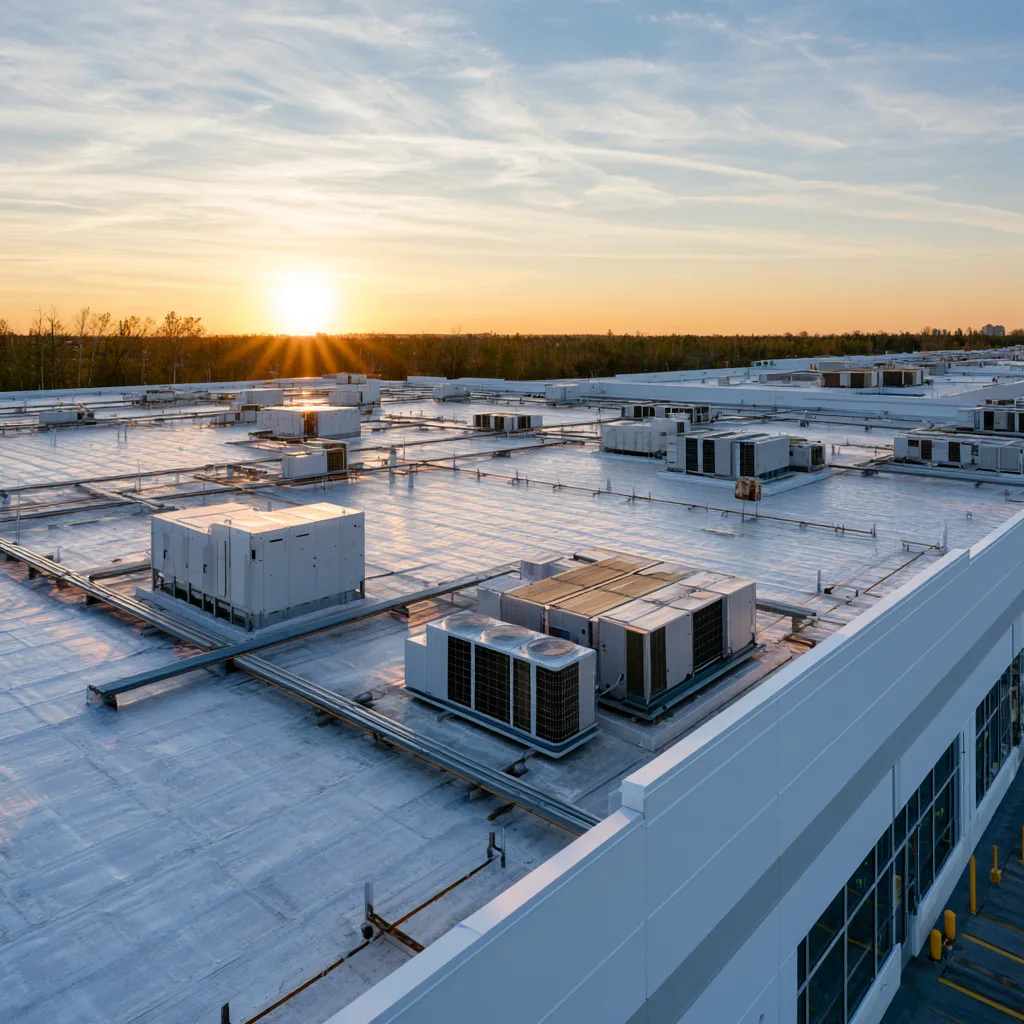
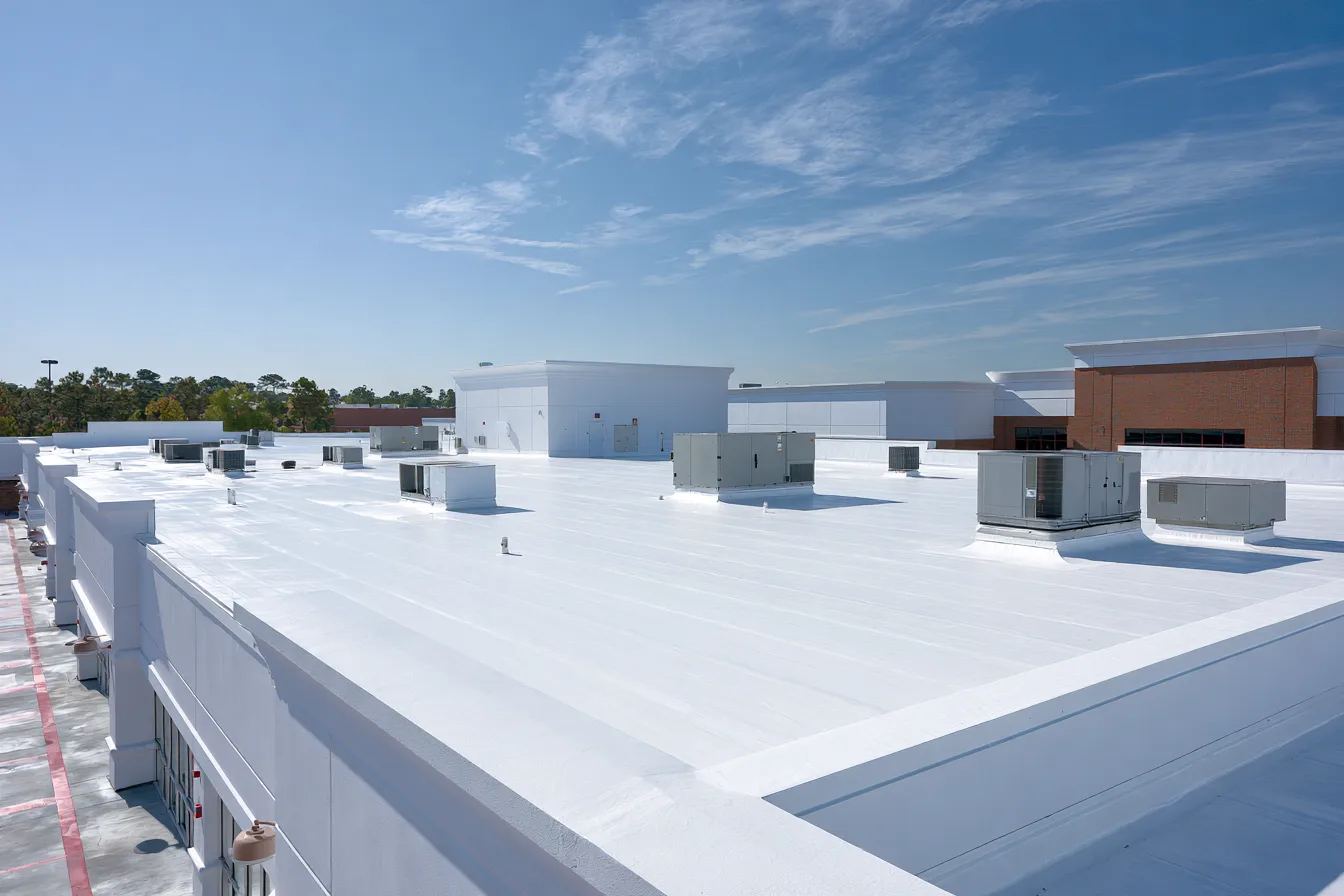
TPO is a thermoplastic single-ply roofing membrane. Its sheets are joined with heat-welded seams, and the assembly includes insulation, attachment, perimeter details and flashings at rooftop openings. A white roof surface alone does not identify every part of the system.
For an existing TPO roof, we assess the field, seams, curbs and penetrations and consider any suspected moisture underneath. That determines whether a local compatible repair is practical or whether a wider area needs replacement.
A seam repair needs material that can accept the specified preparation and welding. Proper heat-welding technique and inspection of cooled seams matter to the finished connection.
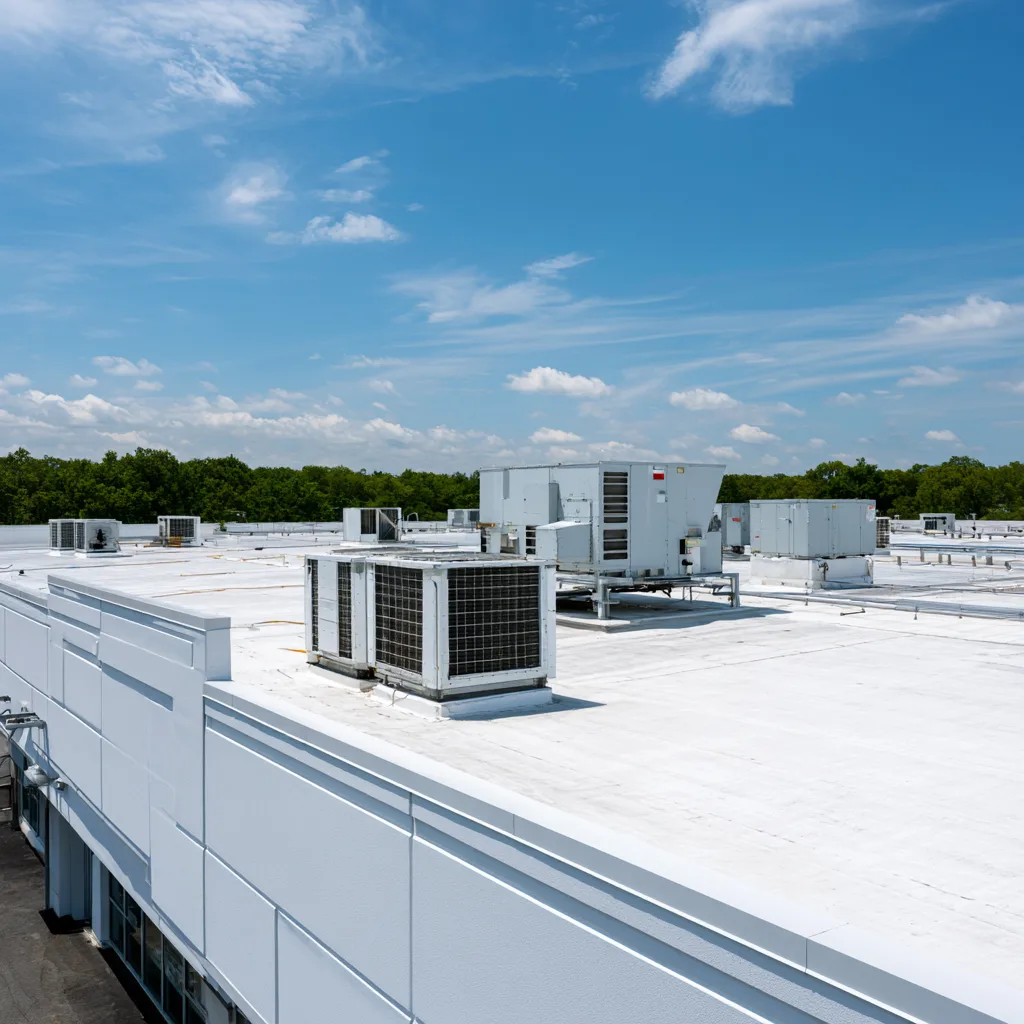
The membrane turns up around interruptions in the roof. Compatible flashing, corners and terminations need to shed water without leaving a weak connection at the unit or opening.
The chosen adhered or mechanically attached assembly determines how the roof is held to the building. Perimeter conditions and support matter alongside membrane condition.
A puncture or limited failed detail can suit repair when the adjoining membrane is serviceable and the underlying assembly is sound. Wider deterioration, moisture or repeated failures can change the boundary to partial or full replacement.
Replacement also lets insulation condition, drainage and the attachment approach be considered together. A coating option requires system-specific compatibility and an eligible prepared roof; it is not an automatic substitute for a new TPO assembly.
Support, insulation, drainage and the selected attachment establish how the new membrane system is designed.
Adhesive use, air intakes, rooftop equipment and access affect staging and installation decisions.
Welded laps, flashings, terminations and penetrations are finished as parts of the chosen system. Product and workmanship warranty terms remain distinct.
| Project part | Budget effect |
|---|---|
| Membrane and attachment | Selected product, thickness and attachment method change material and installation work. |
| Insulation and deck | Moisture, damage, insulation requirements and attachment support change the layers below the membrane. |
| Detail density | Curbs, penetrations, drains and perimeter length add work beyond open roof area. |
| Removal and operations | Existing layers, access, staging and building activity affect the sequence and cost. |
No. TPO is a thermoplastic membrane with heat-welded seams. EPDM is a rubber thermoset membrane using its specified splice and adhesive details. Repair methods need to match the system.
Yes, if the membrane and support are suitable for the specified compatible repair. Material condition and any moisture below it determine whether the repair boundary can remain local.
Product and system warranty terms differ, and workmanship coverage is separate. The issuer, covered assembly, exclusions and remedy determine which coverage applies.
Tell us about the roof system, water entry and occupied spaces below it. We can start with a free inspection and the suitable scope.