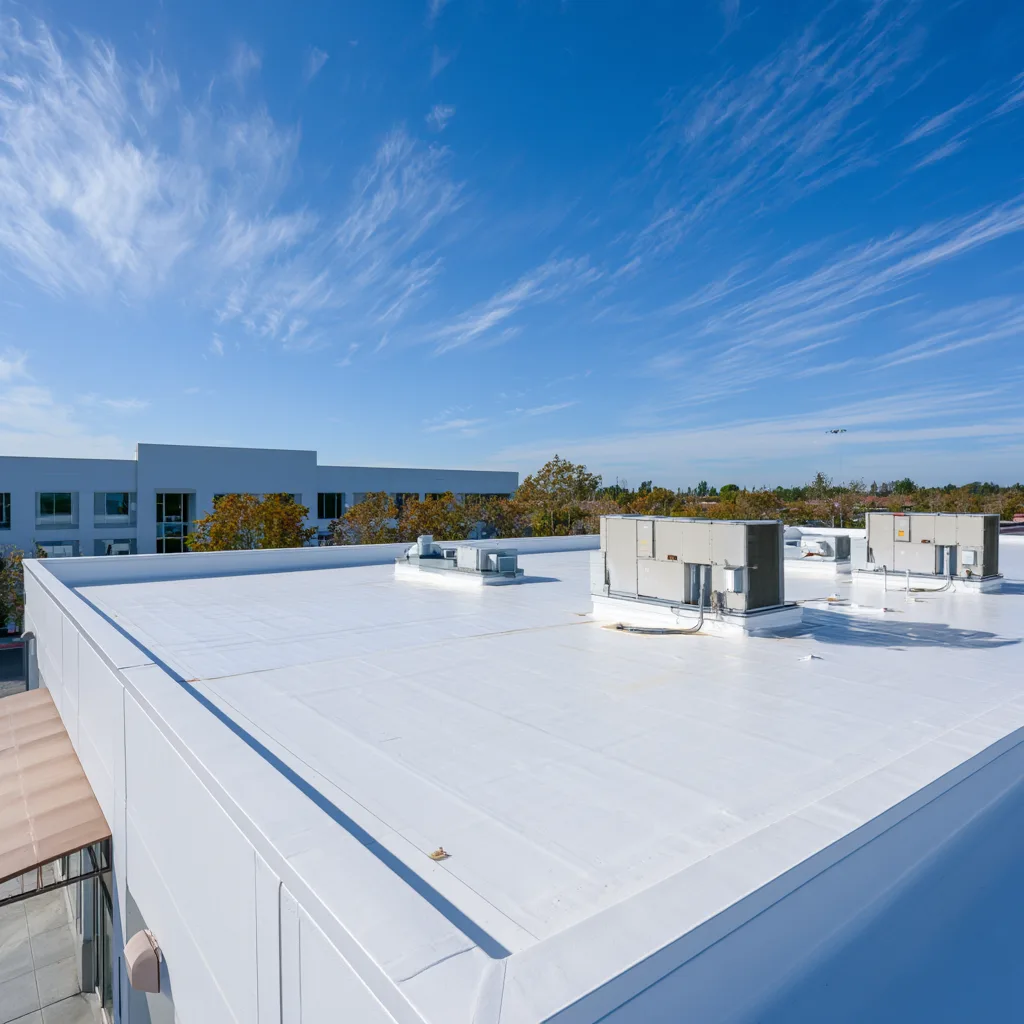
Splice connections
EPDM splices use the specified primer, tape or adhesive system. The adjoining rubber has to be suitable for preparation and bonding. A generic patching material can leave an incompatible connection.
Free roof inspections. Repair and replacement options explained.
EPDM repairs depend on rubber membrane condition and compatible seams, adhesives and flashing. Consider the complete roof before choosing the work.
EPDM is a synthetic rubber roofing membrane. It forms a continuous weather surface with system-specific splices, adhesives and flashing at the edges and openings. It uses different joining methods from heat-welded thermoplastic roofing.
An EPDM roof assessment considers the rubber field, lap connections, terminations and equipment details together. The material condition and support below the membrane determine whether a local repair can be made or a larger area needs attention.
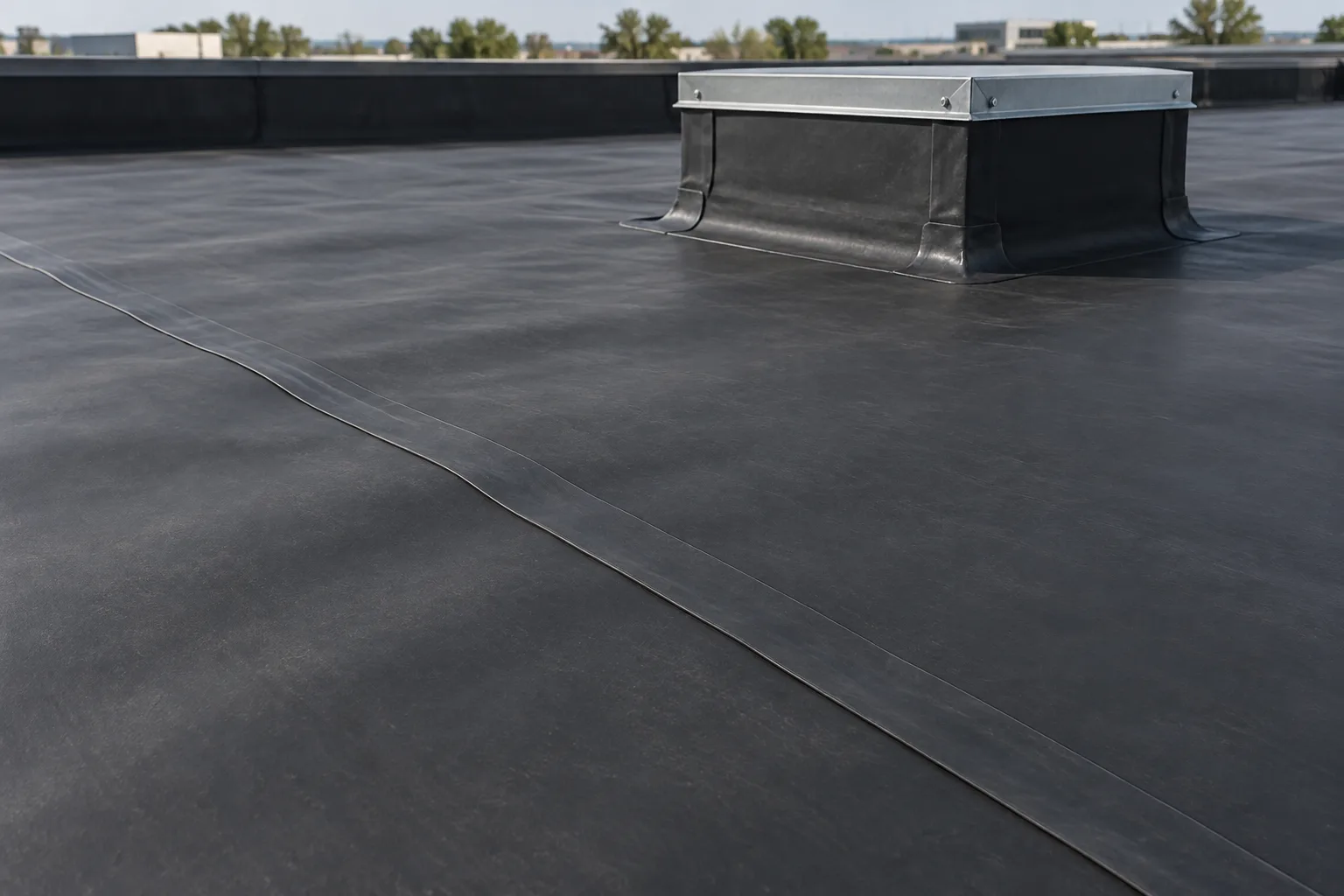
EPDM splices use the specified primer, tape or adhesive system. The adjoining rubber has to be suitable for preparation and bonding. A generic patching material can leave an incompatible connection.
Flashing at a wall, unit or pipe needs to accommodate the roof detail and connect correctly to the membrane. Movement and the condition of the termination affect the repair.
A puncture can be local, while shrinking, separation or wider deterioration changes the repair conversation. The visible surface and any moisture underneath are assessed together.
A compatible patch or splice repair can suit an isolated defect in sound rubber roofing. If the surrounding material cannot hold a reliable bond, the repair boundary has to change. Suspected wet insulation also needs its extent established before the assembly is covered again.
A replacement considers insulation, deck condition and drainage, not just new rubber over the existing shape. Restoration depends on the exact existing membrane and coating system being compatible and the roof being eligible.
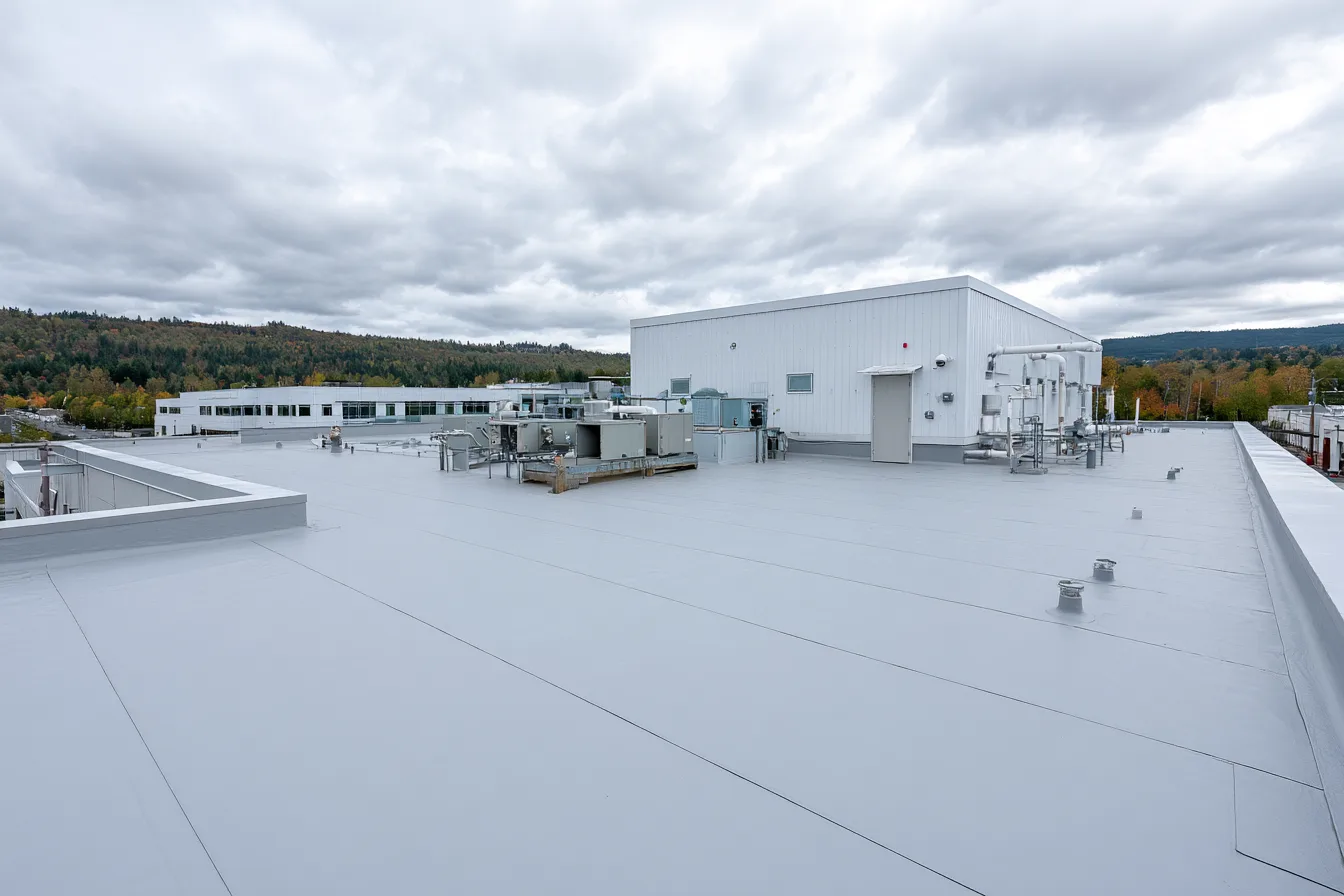
Roof attachment, condition and the spaces below help determine the repair approach and staging.
Adhesive requirements, temperatures, air intakes and rooftop service paths affect how installation is carried out.
Splices, flashing and terminations are completed using the selected system’s methods. Equipment-related work is coordinated separately where needed.
| Factor | What changes |
|---|---|
| Repair boundary | The amount of sound bondable material and affected underlying layers controls the work area. |
| Assembly choice | Membrane, attachment and insulation affect both materials and installation. |
| Detail work | Perimeters, curbs, penetrations and unusual corners add labor beyond the field area. |
| Site constraints | Removal, access, occupied-space protection and equipment coordination change the project sequence. |
EPDM is a thermoset rubber membrane and uses its specified splice and adhesive methods. TPO and PVC are thermoplastics with heat-welded seams. The repair method follows the actual material.
Yes, when a compatible repair can bond to sound prepared membrane and the layers below are suitable. Moisture or wider deterioration can expand the work.
No. Coating compatibility depends on the exact membrane and restoration system. The roof also needs to be dry, sound and properly prepared.
Tell us about the rubber roof and where the problem is affecting the building. Start with a free roof inspection.